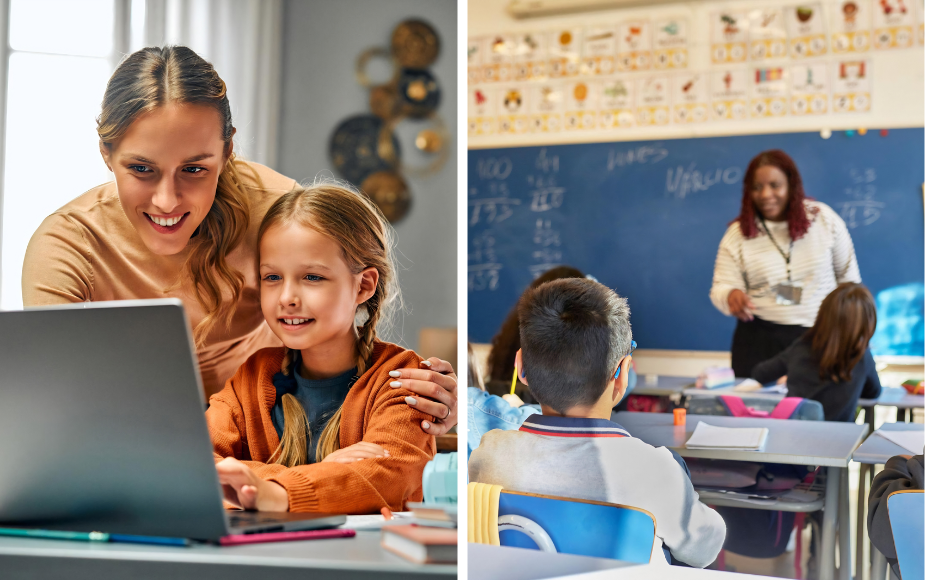
The education landscape has shifted significantly over the past decade, with families now choosing between online schooling, online school programs, and traditional classroom learning. In practice, both routes have their own advantages and also some complications, and honestly, the right call often depends on how a student learns, what the student wants to accomplish, plus the personal context around them.
Here’s a quick guide that lays out the main differences, plus the benefits and drawbacks, so parents can decide with more clarity, instead of guessing, or well, second-guessing too late, especially when comparing best online learning options with conventional education systems.
Understanding Online and Traditional Schooling
Online schooling delivers education through digital platforms where students attend classes virtually using an internet connection. These may include live sessions or recorded lectures through an online study platform, offering flexibility in pace and schedule. Many parents now explore online school programs because they provide easier access to learning from home through online home schooling models.
Traditional schooling, on the other hand, follows the conventional classroom model where students learn in physical schools under direct supervision of teachers, with fixed schedules and in-person interaction.
Pros of Online Schooling
Online education has grown pretty fast, mostly because it is flexible and, yeah, easy to access. A lot of families now lean toward full time online classes for convenience, and for that extra freedom, too. It fits around their life more than the old-style stuff.
Flexible Learning Schedule
Students can study whenever and wherever. This kind of timing help is especially good for learners juggling school with other responsibilities, even if those changes happen suddenly.
Wider Access to Programmes
Students can join programs from different places, even international tracks, that might not exist locally. In the end, that broad reach improves exposure, plus it supports skill growth in a more varied way using a reliable online study platform.
Cost and Time Efficiency
Best online learning can cut down on commuting costs, and it also saves money that would have gone to housing, travel, or extra materials. Less travel time, less expense, more usable effort.
Comfort of Learning Environment
Studying from home can lower stress and help some students stay more focused, particularly those who prefer calm, quiet spaces. It’s not always perfect, but for many, it really supports concentration.
Cons of Online Schooling
Despite its advantages, online learning also has a few challenges, kinda.
1. Lack of Social Interaction
There is less direct face-to-face time, so it can affect communication skills and peer bonding. However, at VIS, this gap is actively addressed through collaborative learning experiences, including joint extracurricular projects and group-based academic activities. Students also often build meaningful friendships beyond the classroom, and there are cases where they connect socially, interact outside school hours, and even visit each other, helping create a strong sense of community despite the online format.
2. It Needs Strong Discipline
Students have to be self-motivated and keep a steady routine without that physical classroom structure around them. However, at VIS, student discipline and academic consistency are supervised by dedicated supervisors who understand the specific challenges of online learning. This structured support system helps students stay focused, organized, and engaged throughout their educational journey.
3. Technical Dependence
You really rely on stable internet and good digital devices; learning can get interrupted, and then it becomes a problem.
4. Less Hands-On Exposure
For topics that require practical doing (like science labs, sports, or arts), it can be harder to deliver properly in an online format. However, at VIS, teachers conduct experiments and practical activities that can be safely performed by students at home using accessible materials. For experiments and demonstrations that require specialized school laboratories, lessons are carefully supported with detailed video materials and guided analysis to help students fully understand the concepts.
Pros of Traditional Schooling
Traditional education still pretty much stays as the most used system, and it keeps being very effective for a bunch of learners, depending on how they learn.
1. Real Social Growth
Students end up building communication skills, making friendships, and learning teamwork through everyday interaction. Online learning environments also encourage collaboration through group discussions, virtual projects, and interactive classroom activities. At VIS, students experience the same level of communication and social engagement as in traditional full-time schools, with the main difference being that interactions take place online rather than physically in person.
2. A Steady Learning Setup
With set timetables, teacher oversight, and dedicated supervisor support, online learning at VIS also maintains strong discipline and a structured daily routine. Students follow organized schedules, attend regular live classes, and receive continuous academic guidance, helping them stay focused, responsible, and consistent throughout their studies.
3. Quick Feedback
Teachers can clear doubts right away, and they’re able to watch student progress more closely, while it’s still fresh. At VIS, students also receive quick feedback from both teachers and curators, ensuring continuous academic support and timely clarification of concepts. This helps learners improve faster and stay aligned with their learning goals.
Cons of Traditional Schooling
Even though it gets broadly accepted, traditional education also has its kind of limits, sorta. It seems helpful, but it can feel a bit rigid sometimes. For example, there are a few downsides that people notice pretty often.
1. Less Flexibility
Students have to stick to set timetables, and that may not fit everyone learning preferences or their own personal situation. Sometimes, the pace is too strict, and it’s hard to adjust.
2. Higher Costs
Transportation costs, uniforms, textbooks, and various school fees can pile up; overall, expenses become higher than expected for many families.
3. Limited Personalization
Teachers usually handle large classrooms, so giving individual attention becomes tricky. It’s not that support is absent; it’s just that the setting makes it harder.
4. Location Constraints
Some students end up traveling far, or even relocating, just to reach better schools. That kind of change can be exhausting, and not always practical.
Online vs Traditional Schooling: Which Is Better?
There is no universal answer. The choice depends on:
- Learning style
- Parental involvement
- Academic goals
- Access to technology
- Need for social interaction
Many modern institutions are now adopting hybrid models, combining both systems to maximize learning outcomes.
Final Thoughts
Both online and the more traditional schooling systems matter in modern education, in different ways. Best online learning brings flexibility and wider reach across the world, while traditional schooling gives steadier structure and supports. However, structured online education at VIS also provides a strong academic framework with consistent teacher supervision, guided schedules, and ongoing student support, ensuring learners benefit from both flexibility and stability. Still, it’s not a one size fits all thing, parents should really look at what their child needs, before they pick the right route.
For families who are checking out flexible education solutions and more structured digital learning through full time online classes, visit