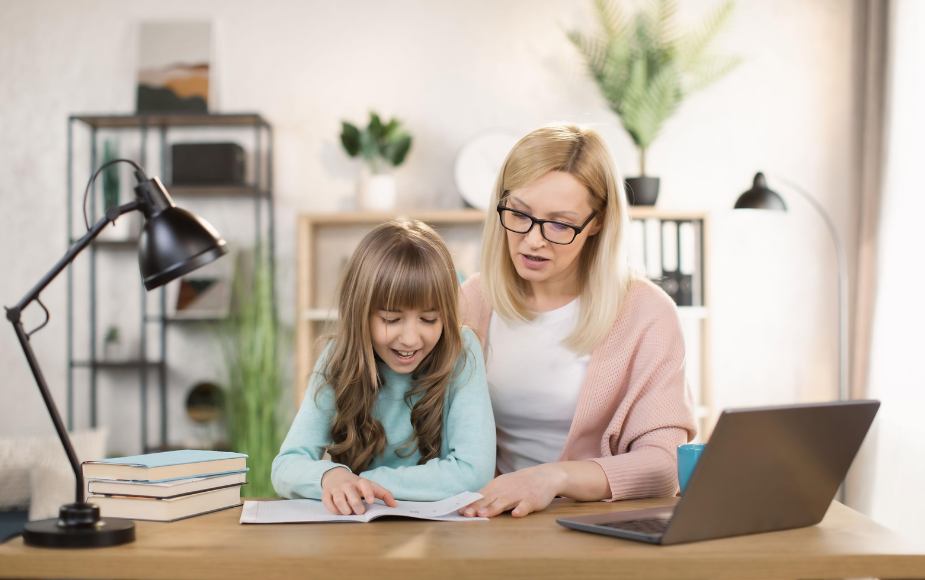
Your child has been sitting in front of the screen for 40 minutes.
The class is running. The teacher is speaking.
But your child? Mentally somewhere between boredom, distraction, and staring blankly at the wall.
If this sounds familiar, you're not alone.
The truth is, online learning for young children doesn't fail because kids are lazy or parents aren't trying hard enough; it usually fails because the environment around the screen isn't built for learning.
And honestly, that's understandable.
The same laptop used for school is also used for cartoons, games, YouTube, and other distractions. The dining table becomes a classroom in the morning and a snack station in the afternoon.
Routines disappear. Attention drifts. Parents aren't always sure how involved they should be.
The good news is that most of these problems are fixable. Yes, fixable.
You don't need to turn your home into a strict classroom. You just need a few consistent habits that make online learning easier, calmer, and more effective for your kids.
As more families shift toward online primary school options, many parents are discovering that academic success depends just as much on the home environment as the school itself.
Here, you’ll learn about parent-friendly tips that will make online learning easier for your kds.
Create One Dedicated Learning Spot
Young children learn through association.
Forget about them. When you were kids, you also learnt from association. Remember?
When they sit in the same place every day for school, their brain slowly starts connecting that space with focus and learning. It doesn't need to be a fancy study room. Even a small corner with a desk and chair works.
What matters is consistency.
Before each class:
- Keep books and stationery ready
- Fill their water bottle beforehand
- Use headphones if possible
- Remove toys and distractions nearby
- Keep the camera at eye level
A predictable setup reduces chaos and helps children mentally switch into "school mode" faster.
Give the Day a Simple Routine
In many successful online education models for students, consistency and daily structure are considered just as important as curriculum quality.
Primary students perform better when they know what comes next.
A consistent routine lowers anxiety, reduces resistance, and improves focus during online classes.
A simple structure can make a huge difference:
Before Class
- Wake up at a fixed time
- Eat breakfast properly
- Change out of pajamas
- Set up the learning space before logging in
During Lessons
- Keep required materials nearby
- Encourage camera participation when needed
- Avoid unnecessary interruptions
Between Classes
- Give short movement breaks
- Let them stretch, walk, snack, or step outside briefly
After School
- Talk casually about what they learned
- Encourage outdoor play or offline activities
Children don't need military-level discipline. They just need rhythm and predictability.
Be Present, But Don't Hover
This is where many parents struggle.
If you sit beside your child correcting every little thing, they become dependent. But if you disappear completely, younger children may lose focus quickly.
The balance depends on age.
Ages 5–7
Stay nearby during lessons. Your presence helps them feel secure and focused.
Ages 8–10
Help them settle in, then step away. Check in occasionally instead of constantly supervising.
Ages 10–11
Encourage more independence. Discuss the lesson afterward rather than monitoring throughout.
The goal is gradual independence, not instant self-management.
Fix Technical Problems Before Class Starts
Nothing ruins a child's confidence faster than technology failing in the middle of class.
A frozen screen or broken microphone may seem small to adults, but for young students, it can feel stressful and embarrassing.
A quick daily tech check helps avoid unnecessary frustration.
Before Classes Begin
- Test internet connection
- Check camera and microphone
- Charge the device properly
- Keep login credentials ready
- Update software after school hours, not before class
Headphones with microphones also improve concentration significantly by reducing background noise.
Stay Connected With Teachers
One reason parents prefer structured online primary school classes is the ability to maintain more direct communication with educators compared to overcrowded traditional classrooms.
In physical schools, parents often get quick updates during pickup or casual conversations outside classrooms.
Online learning removes those small interactions, which means communication has to become intentional.
In online learning, you stay in touch with teachers regularly.
- Inform them if your child is anxious or unwell
- Ask for periodic progress updates
- Discuss attention or participation issues early
- Share concerns before they become larger problems
Small conversations prevent bigger academic and emotional struggles later.
Take Learning Beyond the Screen
The best online classes for kids don't end when the screen turns off. Real understanding develops when children apply lessons in everyday life.
Children remember concepts better when they experience them in real life.
After lessons, try small follow-up activities:
After Science
Do a quick experiment at home.
After Maths
Use measurements while cooking or shopping.
After History
Look at old photographs or maps together.
After English
Ask them to explain the story in their own words.
One of the best techniques is asking children to teach you what they learned. Explaining something aloud strengthens memory and understanding far more than passive listening.
Manage Total Screen Time Carefully
Educational screen time is different from entertainment screen time, but it still adds to overall screen exposure.
A child attending online classes for several hours shouldn't then spend the entire evening watching videos or gaming.
A healthier balance looks like this:
- Live classes and assignments
- Outdoor movement
- Reading physical books
- Creative play
- Family interaction
- Offline hobbies
Children need downtime away from screens for their brains to process and retain information properly.
Build Confidence, Not Just Academic Performance
One overlooked benefit of online learning is that many children become more independent over time.
When supported properly, they learn how to:
- manage routines,
- organize materials,
- solve small problems,
- communicate with teachers,
- and take ownership of learning.
But that confidence develops slowly through consistency, not pressure.
The goal isn't creating a perfect student overnight.
The goal is to create an environment where learning feels calm, supported, and achievable.
Final Thoughts
Schools like VIS and other modern online learning platforms are increasingly designing flexible learning systems that support both academic performance and independent learning habits.
You don't need expensive equipment, strict schedules, or constant supervision.
You need:
- one consistent learning space,
- one predictable daily routine,
- steady parental support,
- and patience while habits develop.
Because the children who succeed in online learning usually aren't the "naturally smartest" ones. They're the ones whose environment helped them focus, participate, and grow with confidence. And that environment is something parents can start building today.
FAQs
1. How can parents make online learning easier for primary students?
Parents can support online learning by creating a consistent study space, maintaining a daily routine, limiting distractions, and staying involved without hovering too much.
2. What is the ideal setup for online primary school classes?
A quiet space with good lighting, stable internet, headphones, school materials, and minimal distractions helps children focus better during online primary school classes.
3. How much screen time is too much for primary students?
Educational screen time is different from entertainment, but balance still matters. Children should also have offline activities like outdoor play, reading, and creative hobbies daily.
4. Should parents sit with children during online classes?
It depends on the child’s age. Younger children may need supervision, while older primary students benefit from gradually developing independence.
5. Why do routines matter in online education for students?
Routines help children feel secure, reduce anxiety, improve focus, and make transitions between learning and breaks much smoother.
6. How can parents reduce distractions during online classes for kids?
Keep toys, mobile phones, television, and unnecessary tabs away during class hours. Using headphones and a fixed learning spot also improves concentration.
7. What are the benefits of online primary school for children?
Online primary school can offer flexible learning, smaller class interactions, personalized attention, improved digital skills, and a more comfortable learning environment for many students.
8. How can parents keep children engaged after online lessons?
Simple activities like experiments, storytelling, practical maths, drawing, and asking children to explain what they learned can improve understanding and retention.
9. Why is communication with teachers important in online learning?
Regular communication helps parents identify academic, emotional, or participation issues early and ensures children receive proper support.
10. Can online classes help children become more independent?
Yes. Structured online learning can gradually teach children responsibility, self-management, organization, and confidence when supported properly at home.